Introduction: Why Buses?
Pity the poor bus. When it comes to moving humans around from point A to point B, there is perhaps nothing quite as maligned as this ubiquitous workhorse of transportation. Stuck in the same traffic as cars, with the same crowds as a packed train, and going more slowly than pretty much anything short of horse and buggy, buses seem to combine the worst aspects of personal automobiles and public transportation into a single package.
This seems to correspond with the general lack of appreciation or fandom for buses. Cars have well developed subcultures of appreciation for everything from elaborated decorated lowriders to overly decked out pickup offroad trucks that rarely leave suburban streets. Trains have “foamers” (so called because they foam at the mouth in their lust for trains), and planes have “avgeeks” (constantly comparing the best lay flat seats), but I have yet to run into a genuine bus enthusiast. The unscientific barometer of YouTube content reflects this. While there are hundreds of channels dedicated to documenting flights, and a somewhat smaller number focused on train travel, the only bus enthusiast channel I am aware of is a Brazilian YouTuber where a great deal of the entertainment comes from the adverse and uncomfortable conditions.
But precisely due to their economy and flexibility, buses are probably the most widely used form of transportation in the world after private cars. Their role can range from a vital sinew of transportation for the masses to a neglected last resort for the poor, but they are almost always present, such a fundamental fixture of the modern world they can fade into the background noise of the city as they rumble past. I think it would be fair to say that almost everybody in the world except for the ultra wealthy or desperately poor will step foot on a bus at some point in their lives, making bus rides one of the most universally shared experiences among most of humankind.
As I think back on my most memorable life experiences both travelling close to home or in distant lands to me, it’s notable how many of my most vivid memories took place on a bus. There is something so authentic and completely human that emerges from the rich tapestry of life situations and experiences that can be found on a crowded bus.
This series will be a pretty loose form profiles on some of the more memorable bus rides I’ve taken over the years. These range from formative experiences, memorable stories, or sometimes just a jumping off point to something I find interesting, always seen through the window of a bus.
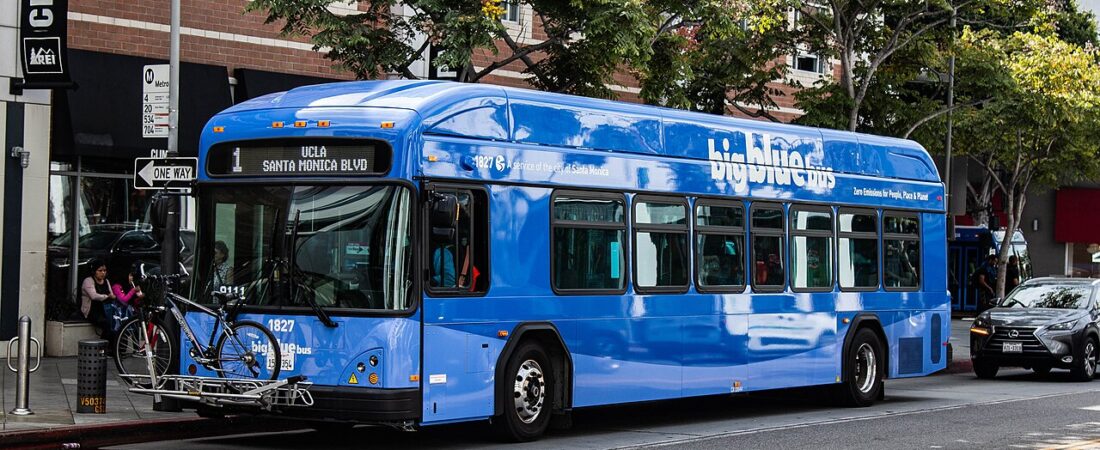
Sometime around 2003: #7 Big Blue Bus, Santa Monica, California
My earliest exposure to the joys of bus riding was as a middle schooler in Los Angeles. As was typical for many of the more fortunate children at my elementary and middle schools, my dedicated parents would drop me off and pick me up from school every day (usually my dad dropping off on his way to work and my mom picking up after school). School buses in the traditional sense are an utterly alien concept in urban Los Angeles given the sheer density and traffic levels, so for most students the ways to school are either via parental largesse or regular city public transportation.
For reasons I cannot quite recall but were probably due to me being a shithead in the way that only middle schoolers can, at some point in 8th grade my mom and I got into an argument that eventually devolved into “well if you are so grown up, you can start taking the bus to school” as she removed a few dollars worth of quarters from her purse. This was equal parts intimidating and thrilling to me. While LA is notorious for its car dependency, being able to get my own drivers license still seemed like an eternity away, and buses offered their own sense of freedom (albeit a more limited one). Buses were also surrounded by an air of slight menace, horror story machines full of sketchy characters and unpleasantness that I suspect was meant as a punishing contrast to the comforts of mom’s car. I remember vividly a story my she would tell about her car breaking down many years ago, and my busy dad trying to avoid picking her up with “Why don’t you take the bus?”, the punchline being that no self respecting husband in LA should ever let his wife wallow on an unreliable bus.
This view of using the bus as a punishment was not entirely without merit. In the United States buses are almost always an afterthought method of transportation, clumsily applied to landscapes designed for personal automobiles as the cheapest (and easiest to cut) way to provide “public transportation”, invariably managed by people who would never dream of actually being on a bus and therefore have no concept of how hateful a user experience they have created. I am reminded of the wonderful Streetsblog series on America’s Sorriest Bus Stops which highlights everything from unsheltered signs on sidewalkless highways to barely discernable slaps of paint on random telephone poles as examples of the sort of priority that American governments give to the bus passenger experience.
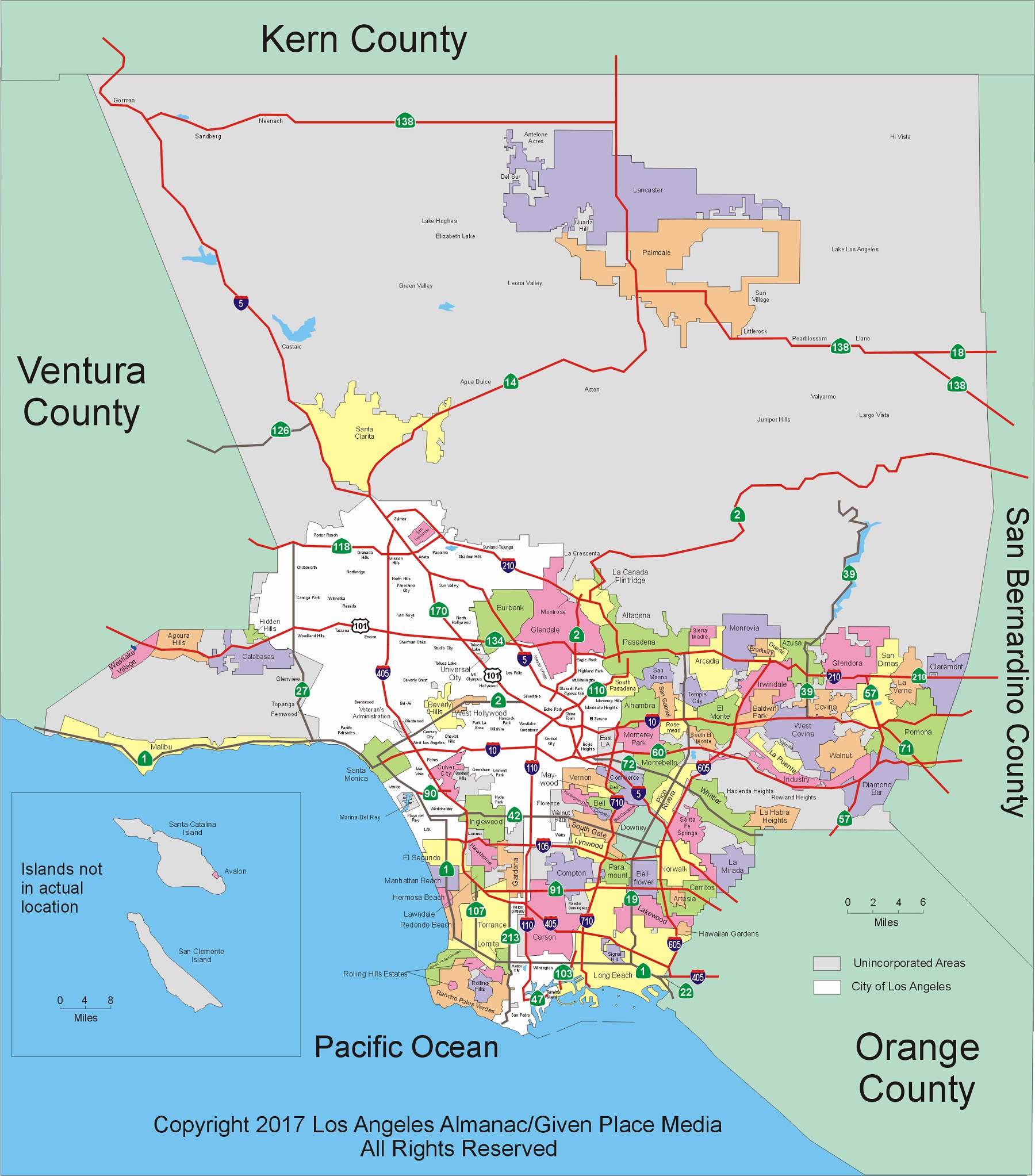
Despite living in the city of Los Angeles, Santa Monica’s Big Blue Bus was our local transit provider that I would be using. The civic boundaries of urban Los Angeles is a somewhat incomprehensible mess of independent small cities surrounded by the much larger city of Los Angeles, leading to distinctions in municipal governance that still can be confusing even as a native. For example, Santa Monica, West Hollywood and Culver City are all independent cities, but Hollywood and Venice are just districts of the city of Los Angeles, and places like Marina del Rey and East Los Angeles are technically part of unincorporated Los Angeles county. This map does a better job than any description at showing the somewhat deranged municipal boundaries that have developed in the region over the years.
This fragmentation of municipal governance also extends to the public transportation systems. Los Angeles Metro is by far the largest and most comprehensive system in the county with 117 bus lines (and 6 rail lines) serving as the long distance connective tissue across the urban area. However, due to what can only be explained as yet another example of lack of political effort focused on effective mass transit, there are a full 45 independent transit agencies in Los Angeles County, an unfortunate result of some poorly thought out funding mechanisms.
Propositions A (1980) and C (1990) were intended to bolster the county’s mass transportation systems by creating designated money streams funded by a sales tax increase. However, both measures made the funds available for any eligible transit operator in LA County, not “one countywide system,” so the legal and financial structure assumed the existence of multiple agencies and then kept rewarding that fragmentation every year.
Local officials in smaller cities liked the political benefits of having a city‑branded bus (local control, tailored routes, union relationships, visible projects), and the Prop A/C formulas mean they can do this without raising their own taxes or fares. Over time, these stable tax streams (plus later measures that followed the same pattern) made the municipal systems into durable institutions able to resist merging into Metro, with their own fleets, staff, and boards.
The end result is an almost comical lineup of tiny transit fiefdoms that are not very good at the actual delivering transit part. Alhambra Community Transit, Arcadia Transit, Bell Gardens Transit, Bellflower Bus, Cerritos On Wheels (COW), Commerce Municipal Bus, Cudahy Area Rapid Transit, Downey Link, El Sol Shuttle/East LA Shuttle, El Monte Transit, La Capaña Transit, Lynwood Breeze, Rosemead Explorer, Sierra Madre Gateway Coach, South Gate GATE, West Covina Go West, West Hollywood Cityline, just to name a few, are all examples of systems that provide service that in any rational system would be managed by Metro, but persist as examples of the law of unintended consequences. One of my favorite transit nerd YouTubers recently tried to ride all 45 of these in a single weekend, and it’s an eye opening documentation of how utterly disconnected and ineffective most of these are.
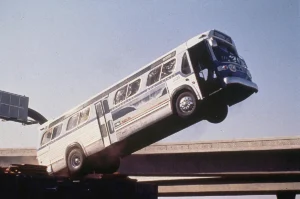
All that being said, Santa Monica’s Big Blue Bus is one of the best run of these smaller bus systems, with reasonable frequencies and a dense route network that runs well past city boundaries into the city of Los Angeles. However, it’s probably most famous for being the operator of the city bus featured in the movie “Speed”.
Even so it never seemed to be anybody’s first choice of getting around. I remember some apprehension at the notion of having to rely on the bus regularly, something ridiculous to me now but a very serious issue for a spoiled 13 year old.
But something funny happened as I started waking up early to take the #7 bus down Pico Boulevard to school: I actually enjoyed it. While sometimes frustrating in its seemingly random frequency of service and often glacial speed, riding the bus every morning and afternoon was true “me” time, letting me feel like part of something greater among the commuters and students.
I still remember faces from those bus rides: the disheveled vagabond youth shaming other colorful characters into giving their seats for the elderly, the passed out heroin addict leaning in impossible contortions in the back of the bus, the older handicapped woman who I’d frequently see, the bus wheelchair loading apparatus groaning into life to pick her up near Centinela and Pico melding with the roar of the freeway above into a typical soundscape of Southern California. I vividly remember one time that said handicap ramp malfunctioned, causing the bus to go out of service and all the passengers to disembark, the curses flung at the disabled passenger from some ill mannered passengers not nearly as saddening to me as her ashamed and defeated face. It was my first taste of the sheer humanity of public transportation, where nearly every ride had some vividly illustrated slice of life, but always alongside hard working people going where they needed to go in a landscape not designed for them.
At some point, whatever slight I had made forgotten or forgiven, my mom offered to start picking me up from school again. I did accept for a time, but later on in my high school years I started voluntarily bus commuting again for the sense of slightly constrained impotent freedom from their parental benefactors that high schoolers so sorely desire. I ended up getting my drivers license at the ripe age of 19, less obsessed with the idea of freedom that a car represented than my peers probably due to my comfort with using the bus system.
I recently rode the #7 again, and while the coin slot was now replaced with a transit card reader, the Big Blue Bus was much the same as it ever was, colorful characters and all (though now they’ve upgraded to messily eating Whole Foods salads). Feeling the bus rumble beneath me as we passed by a familiar but changed cityscape that I could still fill with landmarks that only exist in my memory was as close to feeling home as I have ever felt.